
The Big Difference Between Patches and Updates
People often use “patches” and “updates” as if they mean the same thing. They don’t, and knowing the difference changes how you should roll each one out.
Here’s a plain-English look at both, and how Michigan businesses can apply them without disrupting the workday.
What’s the big difference?
Patches and updates both keep your devices and critical software secure. Over time, weaknesses or problems turn up, and software makers fix them by releasing patches and updates. The big difference is scope and scale.
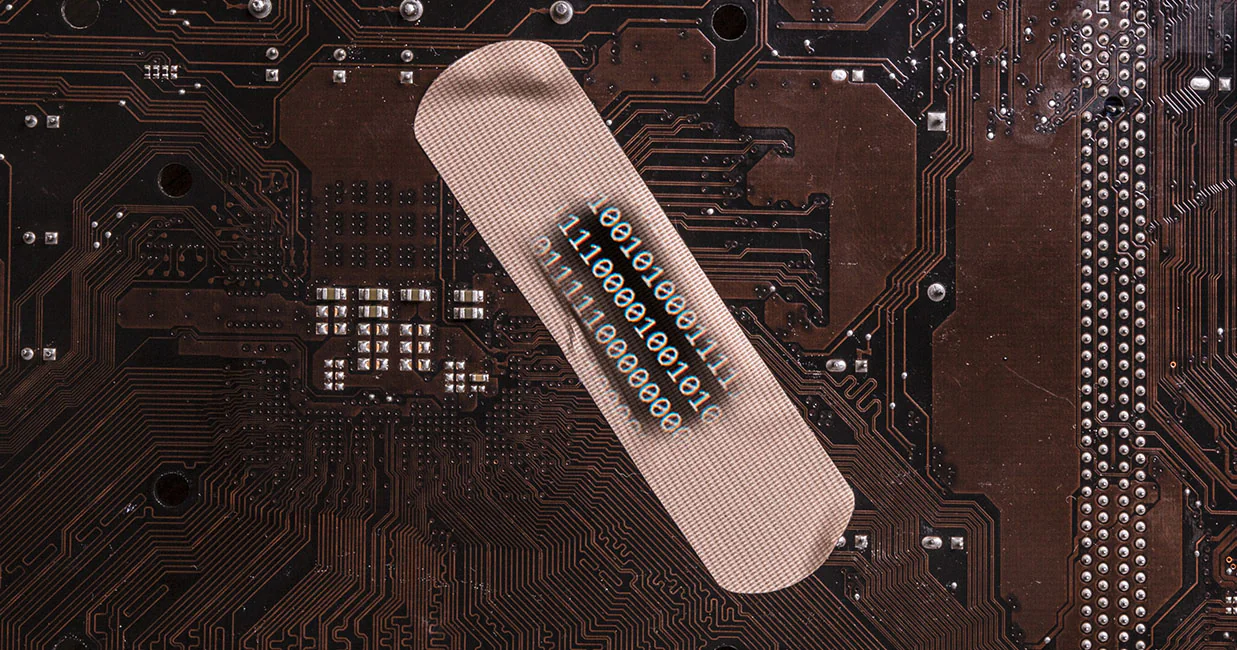
A patch is a quick fix.
Patches usually fix one specific problem that needs attention. Think of patching a tear in a piece of clothing: you sew a piece of fabric over the hole.
An update is a bigger change.
Updates are more structural and usually larger in scope. They may fix several problems at once. It’s like replacing the fabric of the shirt instead of patching the hole.
Why should you care?
Updates can change how you work.
An update may solve several security problems, but it can also bring new bugs or change how your team gets things done. Imagine your operating system updating overnight: the screens look different, or a task you rely on stops working the way you expect.
Plan before you apply.
That’s why patches and updates shouldn’t be applied on a whim. Approach them carefully so they have as little impact on your operations as possible.
Make patches and updates easy
- Know what’s coming. Check whether it’s a small patch or a larger update.
- Pick the right time. Apply them when they’ll disrupt the least work.
- Let someone keep watch. Remote management tools can apply them without an on-site visit.
The bottom line
Patches and updates are essential, but they work best when they’re planned. We apply patches and security updates remotely as part of our monitoring and management services, so someone is keeping an eye on your systems. To learn more, our Michigan team is here. Talk to our team: 248‑545‑0800.
From the Fuse archive, first published September 2, 2022. Read the latest on the Fuse blog.