
Protecting electronic Protected Health Information takes more than antivirus software and secure passwords. Michigan healthcare providers, dental practices, and HIPAA Business Associates need administrative, physical, and technical safeguards that meet the HIPAA Security Rule while defending against evolving threats. Since 2006, Fuse Technology Group has helped organizations across Michigan build secure, audit-ready IT environments that support patient care and reduce cybersecurity risk.

Healthcare organizations continue to be one of the most targeted industries for cyberattacks. Ransomware, phishing, insider threats, and data breaches can disrupt operations, expose sensitive patient information, and result in significant financial penalties.
Maintaining HIPAA compliance helps your organization:
Compliance isn’t simply about avoiding fines; it’s about building a secure environment that supports your patients, employees, and organization.
The HIPAA Security Rule establishes technical safeguards that help protect electronic Protected Health Information.

Only authorized users should have access to patient information. We implement role-based access controls, unique user accounts, Multi-Factor Authentication, and automatic session timeouts to reduce unauthorized access.

Healthcare organizations must maintain detailed audit logs that record system activity and user access. These logs help demonstrate compliance while supporting investigations if security incidents occur.
We help protect sensitive patient information by implementing encryption for devices, servers, email communications, backups, and data transmitted across networks.

Maintaining the accuracy and integrity of patient information is critical. We implement monitoring tools and security controls that detect unauthorized modifications or suspicious activity.
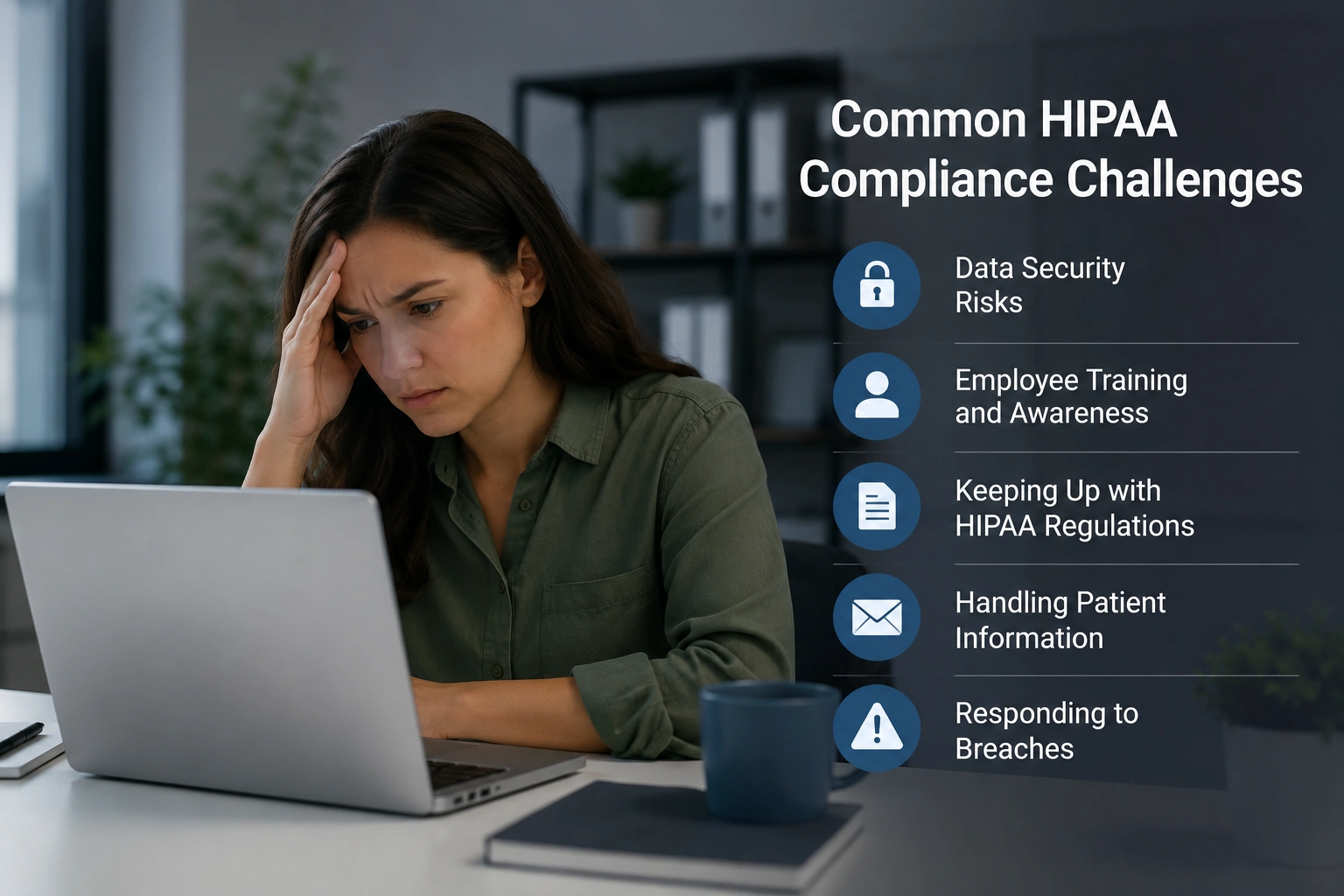
Many organizations struggle with the same recurring issues during compliance assessments.
Common challenges include:
Addressing these issues proactively reduces both cybersecurity risk and regulatory exposure.

Healthcare organizations need an IT partner that understands both technology and compliance.
Since 2006, Fuse Technology Group has helped Michigan organizations improve cybersecurity while supporting HIPAA compliance through proactive managed IT services.
Organizations choose Fuse because we provide:
Rather than simply identifying compliance gaps, we help implement practical solutions that strengthen both security and day-to-day operations.

We evaluate your current IT environment, identify security risks, and perform a comprehensive HIPAA Security Risk Assessment.

We develop a prioritized remediation roadmap aligned with your organization’s operational needs and compliance goals.

Our engineers deploy technical safeguards, improve network security, strengthen access controls, and secure sensitive patient information.

We prepare and maintain policies, procedures, Security Risk Assessments, Business Associate Agreements, and supporting compliance documentation.

Our managed IT services continuously monitor your environment, perform vulnerability scanning, update systems, and help maintain compliance over time.
Fuse Technology Group proudly supports healthcare providers throughout Michigan, including:
Whether you’re an independent practice or a multi-location healthcare organization, we provide responsive local support backed by experienced cybersecurity professionals.

HIPAA IT compliance refers to implementing the technical, administrative, and physical safeguards required under the HIPAA Security Rule to protect electronic Protected Health Information (ePHI).
Healthcare providers, health plans, healthcare clearinghouses, and many Business Associates that create, receive, maintain, or transmit ePHI must comply with HIPAA.
A Security Risk Assessment (SRA) evaluates your organization’s technology, identifies vulnerabilities, and helps prioritize remediation efforts required under the HIPAA Security Rule.
Yes. HIPAA requirements apply regardless of practice size. Smaller organizations are frequently targeted by cybercriminals and remain subject to OCR enforcement.
Yes. We execute Business Associate Agreements (BAAs) with clients when required and help review relationships with other vendors that access Protected Health Information.
Absolutely. We provide continuous monitoring, managed cybersecurity, annual risk assessments, documentation updates, employee security training, and ongoing IT management to help maintain compliance.
Yes. We regularly partner with internal IT departments by providing cybersecurity expertise, compliance guidance, and project support.
Located in Ferndale, Fuse Technology Group is the premier provider of Business IT Services. Providing business computer support to hundreds of clients in Detroit, Troy, Southfield, Royal Oak, Birmingham and throughout the state of Michigan.
If you wish to receive our latest news in your email box, just subscribe to our newsletter. We won’t spam you, we promise!
If you wish to receive our latest news in your email box, just subscribe to our newsletter. We won’t spam you, we promise!
Located in Ferndale, Fuse Technology Group is the premier provider of Business IT Services. Providing business computer support to hundreds of clients in Detroit, Troy, Southfield, Royal Oak, Birmingham and throughout the state of Michigan.
Copyright © 2026 – Fuse Technology Group, Inc. All Rights Reserved. Built in partnership with Tech Pro Marketing | Areas We Serve